
ULISSE
l’arte della fuga
NAVIGANDO DA BACH A DALLAPICCOLA
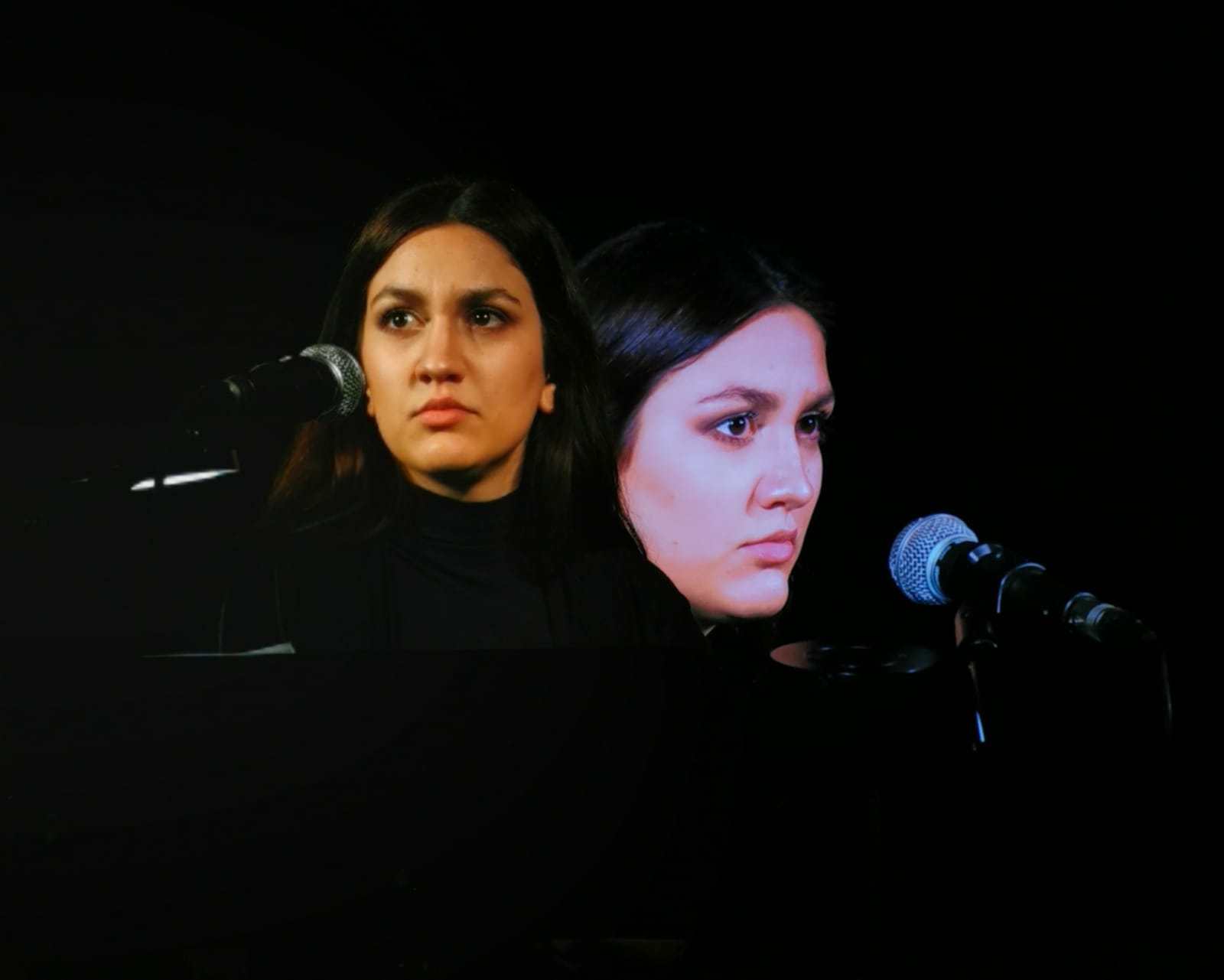
testo poetico e regia: Auretta Sterrantino
con: Giulia Messina, Carlotta Maria Messina
musiche di J.S. Bach e L. Dallapiccola
progetto audio: Vincenzo Quadarella
ufficio stampa: Marta Cutugno
QA-QuasiAnonimaProduzioni/NutrimentiTerrestri
Lo spettacolo nasce nel 2019 con l’attore Sergio Basile, un differente repertorio musicale differente ed eseguito dal vivo al pianoforte da Filippo La Marca e in collaborazione con il Centro Studi Luigi Dallapiccola. Nel 2024 riprende la sua navigazione in una nuova forma, legata a una nuova tappa di studio della compagnia e della regista che intende il lavoro teatrale come un’indagine sempre in corso. Il lavoro in questa nuova veste, con musiche registrate che al pianoforte aggiungono la voce degli archi, continua a muoversi tra Bach e Dallapiccola, nel solco di una tradizione che significa trasmissione e innovazione contemporaneamente: “attraversamento”. Una relazione solcata con la nave di un Ulisse anch’esso figlio della tradizione e a sua volta tràdito e tradito da autori successivi ad Omero. Un Ulisse che viaggia per il viaggio e non per il ritorno e che anzi nel viaggio indugia, quasi tradendo il suo oikos: la sua patria, il suo regno, la sua casa, la sua famiglia.
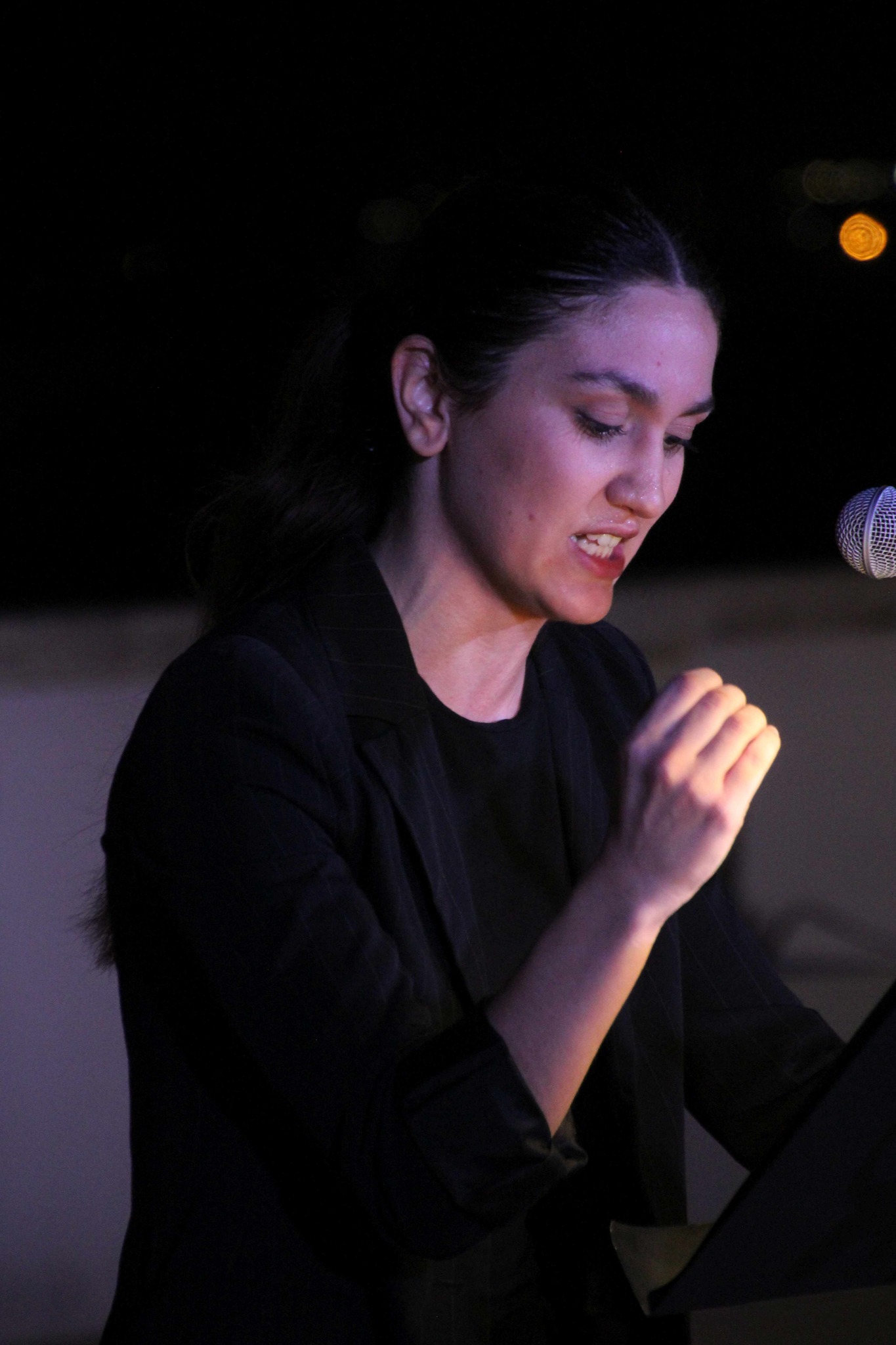
Un dissidio tra il desiderio del viaggio, della scoperta, la seduzione dell’ignoto e il conforto degli affetti, la stabilità della famiglia. La scelta ponderata è quella di restituire questa dicotomia attraverso un lavoro che crea azione grazie al movimento drammaturgico creato dal dialogo tra musica e parola, nell’apparente immobilità dell’attore, che fermo al leggio in realtà muove sé stesso e il proprio sentire in un viaggio che diventa il viaggio dello spettatore. Un viaggio intimo e profondo, che scava l’animo nel solco di un dissidio lacerante, rendendolo vivo e travolgente senza rappresentarlo.
THE PROJECT
Ulysses: The Art of Fugue, has a rich history of development. The show originated in 2019 with actor Sergio Basile and a different musical repertoire, performed live on piano by Filippo La Marca. This was a collaboration with the Luigi Dallapiccola Study Centre. In 2024, it resumed its journey in a new form, linked to a fresh stage of study for both the company and the director, who views theatrical work as an ongoing investigation. In this new version, with recorded music adding the voice of strings to the piano, the work continues to move between Bach and Dallapiccola, in the wake of a tradition that signifies both transmission and contemporary innovation: “crossing”.
A new study in 2025 led us to the performance we are now presenting, which premiered in Malaga, Spain. This new study saw the addition of the character Penelope, with the vocal research also focusing on spatialisation and the singing voice. We have an active co-production with NutrimentiTerrestri, a company funded by the Ministry in Italy.
As our work is research-based, we are always ready to question and dig deeper.
THE PERFORMANCE
The performance, titled Ulysses: The Art of Fugue, is a journey into the heart of a timeless conflict. It weaves together the music of Bach and Dallapiccola with contemporary electronic scores, seeking to create a vibrant dialogue between tradition and innovation. The work centres on a Ulysses who travels not for his return, but for the journey itself. He is a man who is drawn to the unknown, yet suffers from the lack of comfort that home provides. This profound struggle is also mirrored, albeit in different terms, by Penelope, who is left behind, gripped by the anxiety of waiting and the extreme pain of absence.
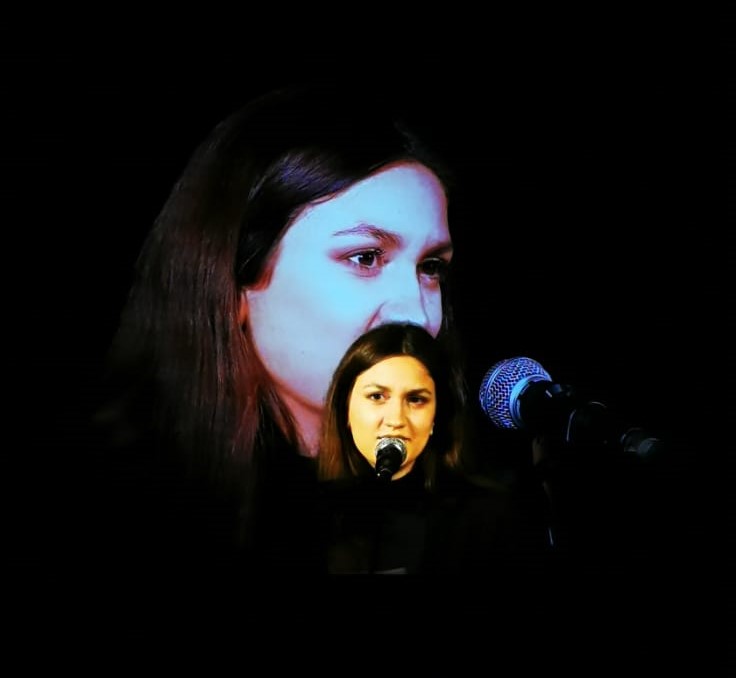
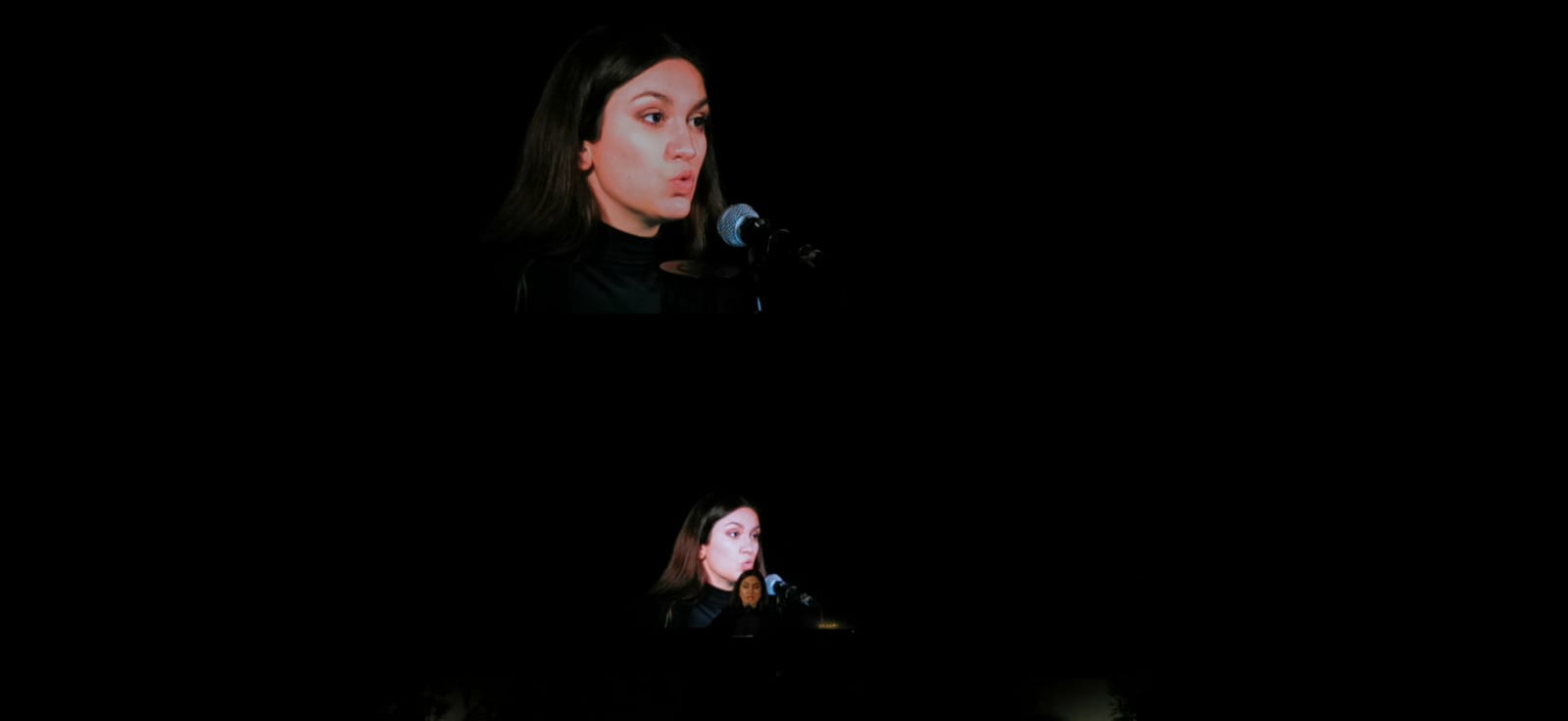
The piece conveys this dichotomy through a dramatic dialogue between music and the spoken word. The voice becomes the primary means of conveying the dramatic arc of the entire piece and bringing to the stage not only the characters’ inner conflict but also their extreme solitude. Ulysses and Penelope never speak directly to each other, as they inhabit entirely separate physical and emotional spaces. Ulysses’s journey is a physical exploration that transforms into a quest for the self, while Penelope’s is a journey through the emotional landscape of loss and endurance. It is thanks to the research conducted on the use of the voice that the individual experiences of the two characters find a meeting point to resonate together.
The music acts as the very soul of the performance. Bach’s work, with its rigid mathematical precision and structured harmony, stands in apparent contrast to the dodecaphonic music of Dallapiccola (who was a great admirer and a debtor of Bach himself) and the original electronic scores. This aural tapestry of past and present, of order and disorder, reflects the characters’ inner turmoil and the very essence of their opposing paths.
The power of the voice and music becomes an image within the individual experience of the audience, who thus become active participants. The apparent absence of stage action is a powerful illusion. In reality, the very action is trapped within the proposed conflict, which thus becomes an immersive experience in which spectators are no longer just observers but fellow travellers and protagonists, exploring their own feelings about home, duty, and the irresistible call of the open road towards total freedom.
This third iteration of the performance, which brings both Ulysses’s and Penelope’s journeys together, premiered in April 2025 in Malaga. We believe it is a powerful exploration of a myth that remains as relevant today as it was in ancient times.
THE VOICE
In our performance, the voice is not merely a tool for dialogue; it is the principle instrument of action and the true protagonist of the work.
The piece focuses entirely on the human voice to convey the characters’ inner conflict and profound solitude. The actors do not perform any recognisable or didactic actions; instead, their voices move on a powerful, emotional journey that the audience can share.
We’ve conducted extensive research into using the voice to create an entire dramatic world. We explore its relationship with music, using it to mirror the characters’ inner feelings and to transform their individual experiences into a shared resonance.
Through the power of the voice alone, we aim to bridge the physical and emotional distance between Ulysses and Penelope. The voice becomes the primary means of creating a visual world for the audience, encouraging them to imagine and perceive the characters’ emotional landscapes.
Essentially, this performance is a profound exploration of what the voice can achieve when it is freed from the constraints of traditional theatrical action. It is a testament to its power to tell a story, evoke emotions, and build a shared experience with the audience.
Our research is focused on the embodied voice and its modulation based on the intention to be expressed, working in depth on the variations even within a single word. The voice must always construct meaning and sense. This work is accompanied by physical training aimed at enhancing this research.
AURETTA STERRANTINO
«Ulisse è il viaggio.
Il punto di domanda che si sposta sempre di pensiero in pensiero.
Il cerchio di fumo che si allarga per accogliere il successivo.
Sete d’acqua. E di sale.
Ulisse ascolta anche il silenzio.
Ulisse è il silenzio o la voce della solitudine.
Ulisse è il dissidio super-contemporaneo tra essere e agire o ancora meglio tra essere in stasi ed essere in movimento.
Forse una ricerca che coincide con un ritorno a se stessi e un successivo superamento.
Il ritorno è un inganno, come il canto della sirena.
Ogni donna è sirena.
Ogni onda è sirena.
La memoria è sirena.
Il punto è non fermarsi di fronte al limite estremo.
Essere oltre il limite estremo.
E spostare il limite estremo, che come ogni cosa è squisitamente soggettivo».
«Guardare, meravigliarsi, tornare a guardare»
Luigi Dallapiccola
MARIO RUFFINI (presidente del Centro Studi Luigi Dallapiccola)
«Il grande tema di Ulisse, lascia le arcaiche forme omeriche e fugge verso la modernità, grazie a Dante. E con Dante, il suo peregrinare nella memoria e nell’oblio ha sempre una luce, che è a forma di stella. Una stella che passa sopra gli orizzonti pagani dell’eroe, e dà luce a quegli orizzonti da sempre oscuri. Il passaggio della stella dona a Ulisse nuovi orizzonti, per sempre luminosi.
Ecco dunque la parola STELLE, la più pura e luminosa di tutta l’esegesi dallapiccoliana.
Le stelle riportano alla solida formazione dantesca del compositore
«e quindi uscimmo a riveder le stelle» (Inferno)
«puro e disposto a salire alle stelle» (Purgatorio)
«l’amor che move il sole e l’altre stelle» (Paradiso)
Un traccia per seguire il mio volo a Messina, l’arte della fuga, dove Ulisse dà inizio al cammino, doloroso, alla ricerca dell’oblio.
Fuga dal ricordo. Un percorso obbligato verso l’arte dell’oblio: il pianto.
Fuga dalla primitiva formazione di astutissimo bugiardo, mentitore e ingannatore;
Fuga (non riuscita) dagli obblighi della guerra;
Fuga dalla città trasparenza e dalla fierezza della battaglia (l’inganno del cavallo);
Fuga dalla città conquistata (Troia);
Fuga da Polifemo (Nessuno);
Fuga dai rimorsi della coscienza (Scilla e Cariddi);
Fuga dalle sorgenti vitali che tappa dopo tappa si offrono all’eroe sulla via del ritorno;
Fuga dalla bellezza (Nausicaa);
Fuga dall’essenza della femminilità (Calypso);
Fuga dalla coscienza (Circe);
Fuga dopo il ritorno a Itaca (conoscenza).
Solo l’estrema catabasi di fronte alla montagna bruna potrà arrestare l’erranza infinita di una fuga senza fine: quella della memoria, destinata a conservare ogni barlume del passato, un passato oscuro e tutt’a un tratto diventato luminoso grazie a una stella. La memoria, la più crudele lama per trafiggere ogni istante della vita che rimane».